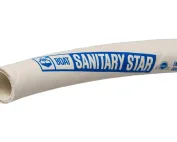
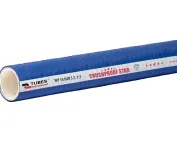
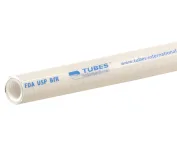
Silicone hoses and silicone tubings2026-03-18T14:36:36+01:00

Silicone hoses and silicone tubings

  • silicone hoses
  • clear silicone tubing

Silicone hoses and silicone tubings – general information

Silicone hoses, thanks to their unique physical and chemical properties, are widely used in many industries such as: pharmaceutical, biotechnological, medical, food, machine-building, construction, power industry and in many other sectors.

The physicochemical properties of the silicone hoses depend on their composition.  Because manufacturers offer a great diversity of rubber types as well as various fillers, cross-linking agents and other ingredients but also different processing methods, it is possible to match silicone hose characteristics to specific operating conditions and Customer expectations.

The basic characteristics of the silicone rubber include:

  • resistance to both low and high temperatures with only minor changes in physical properties,
  • dielectric breakdown properties,
  • good resistance to oxidation,
  • physiological inertness,
  • high compressibility and resilience,
  • tear resistance
  • excellent resistance to infrared radiation, ultraviolet radiation, UV and weather conditions,
  • resistance to low pressure steam up to 3 atm. (high pressure steam causes partial degradation of silicone),
  • lack of resistance to concentrated acids, alkalis, petrochemical products with aromatic content.

Silicone-based hoses are typically vulcanized (cured) at a high temperature ranging from 120°C to 200°C with the use of a catalyst, i.e. a substance that initiates and facilitates the formation of new chemical bonds (cross-linking). Depending on the type of catalyst, two commonly used methods of vulcanizing silicone hoses are distinguished: peroxide vulcanization (peroxide cured) and platinum vulcanization (platinum cured). Both methods have advantages and disadvantages.

Peroxide vulcanization:

AdvantagesDisadvantages
  • longer hose service life during operation with a peristaltic pump,
  • lower permanent compression set (important for gaskets),
  • a more cost-effective option.
  • susceptibility to contamination adhesion,
  • possible release of vulcanization by-products,
  • the hoses are less transparent and more matte.

Platinum vulcanization:

AdvantagesDisadvantages
  • cleaner – no vulcanization by-products,
  • less prone to contamination adhesion,
  • the hoses are more transparent, which provides better flow visualization.
  • shorter hose service life during operation with a peristaltic pump,
  • higher cost.

Depending on the application, silicone hoses can be divided into:

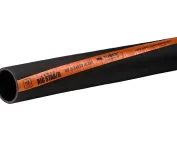
  • Silicone rubber hoses intended for general industrial use, used, for example, for cooling or for hot air, in various industrial installations and equipment. Hoses without reinforcement or reinforced with textile braid. Intended for low working pressures from very low (below 1 bar) up to several bar. Operating temperature range from -60°C to +200°C.
    • Versitec: Resistant to UV radiation, oxygen and ozone. A high-quality universal, soft and flexible industrial silicone hose vulcanized with peroxide. Resistant to UV radiation, oxygen and ozone.
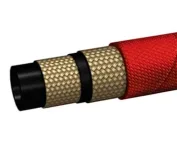
    • Redsil: a universal pressure hose reinforced with PET braid, outer layer made of red silicone. Intended for liquids and gases, used in many branches of industry.
    • Versilic®: a soft and flexible, high-quality peroxide-cured silicone hose for peristaltic pumps. A hose with good chemical resistance.
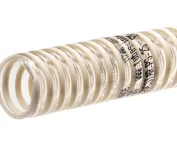
  • Silicone hoses for food applications, manufactured by peroxide or platinum vulcanization of silicone rubber, as unreinforced hoses or hoses with textile reinforcement, optionally with a steel helix. Depending on the rubber and reinforcement, they may be transparent or translucent. They are characterized by a very smooth inner surface preventing contamination from adhering. Intended for low working pressures from very low (below 1 bar) up to several bar. Operating temperature range from -60°C to 200°C. Suitable for sterilization by various methods (e.g. steam, ethylene oxide, radiation). Compliant with the hygienic requirements of FDA, Pharmacopoeia, BfR, and EC directives.
    • Versilon SPX-60 FB: A soft, flexible and kink-resistant peroxide-cured silicone hose intended specifically for food products and beverages.
  • Pharmatech: a high-quality platinum-cured pressure delivery hose. Manufactured in a cleanroom. The perfectly smooth mirror-like inner surface of the hose prevents product particle deposits and bacterial growth and facilitates hose cleaning. Used in the food, pharmaceutical, cosmetic and biotechnological industries.
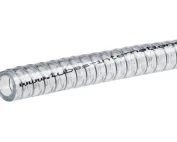
  • Silicone Star D / SD / HD: a high-quality platinum-cured silicone hose. The inner layer of the hose is extruded in a cleanroom. Available in three design versions: Silicone Star D – delivery hose, without steel helix; Silicone Star SD – suction and delivery hose, with steel helix; and Silicone Star HD – HEAVY DUTY suction and delivery hose, with a thickened wall and an additional silicone layer, for more demanding operating conditions. All versions are reinforced with 4 layers of high-strength polyester fabric.
    • Clearway Platinum D / SD / HD: a high-quality platinum-cured silicone hose. Available in three design versions: Clearway Platinum D – delivery hose, without steel helix; Clearway Platinum SD – suction and delivery hose, with steel helix; and Clearway Platinum HD – HEAVY DUTY suction and delivery hose, with a thickened wall and stronger construction, for more demanding operating conditions and even greater durability. All versions are reinforced with spirally arranged layers of high-strength synthetic fabric. The hoses are intended for the transfer of high-purity products, food substances, and liquids with an alcohol content of up to 96%. Commonly used in the food, pharmaceutical and cosmetic industries.

Hoses for food substances can also be found in the groups: food hoses, TYGON® hoses, PTFE hoses.

  • Hoses used for pharmaceutical production, in medicine and biotechnology, manufactured from materials of the highest purity in a cleanroom, using platinum vulcanization technology of silicone rubber, as unreinforced hoses or hoses with textile reinforcement, optionally with a steel helix. Depending on the material and reinforcement, they may be transparent or translucent. They are characterized by an extremely smooth inner surface preventing contamination from adhering. Intended for low working pressures from very low (below 1 bar) up to several bar. Operating temperature range from -62°C to +260°C. Suitable for sterilization by various methods (e.g. steam, ethylene oxide, radiation, autoclaving). Compliant with the hygienic requirements of FDA, Pharmacopoeia, BfR, EC directives, and validation standards concerning extractables, pyrogenicity, cytotoxicity and hemolyticity. Made of silicone and other materials.
    • DYNAMIC Cleanroom-Platinum: platinum-cured silicone pressure hose with a fluoropolymer liner – for demanding applications. Free from substances of animal origin, phthalates, adipates, nitrosamines, and materials subject to REACH and RoHS restrictions.
    • Sani-Tech® STHT®-C / STHT®-65: platinum-cured hoses made of exceptionally pure silicone, with permanent laser marking of the hose type and batch number. Used for sterile filling and transfer of substances requiring high purity: blood-derived products, medicines, cell cultures, laboratory fluids, and biopharmaceutical processing products.
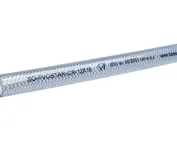
    • Sani-Tech® STHT®-R: a platinum-cured hose made of ultra-pure silicone reinforced with a high-strength braid.
    • Sani-Tech® ULTRA-C / ULTRA-65: platinum-cured hoses with extremely low extractables from the hose material and extended service life in peristaltic pump applications.
    • C-Flex® 374: a translucent, flexible hose made of a patented thermoplastic elastomer. Designed according to the critical requirements of pharmaceutical and biotechnological applications with excellent sterile sealing capability, easily heat-sealable. Chemically resistant, including resistance to concentrated acids and alkalis.

Hoses for pharmaceutical and biotechnological applications can also be found in the group: TYGON® hoses, PTFE hoses.

Catalogue
Download

Sales Network
Check

E-shop
See more

Inquiry
Send

Product types:

Silicone hoses transparent

Silicone hoses transparent

Silicone tubing reinforced

Silicone hoses reinforced

List of products:

Silicone hoses classic

Silicone hoses general-purpose

Silicone hoses for foodstuffs

Silicone hoses for foodstuffs

silicone tubing

Silicone hoses for pharma and biotech products

silicone hoses fittings

Biotechnology and pharmaceutical hose fittings and connectors

If you need help choosing a product or haven’t found the right one?

FAQ – Silicone hoses:

What are silicone hoses used for?2023-07-05T15:15:23+02:00

Silicone hoses are used in a wide range of industries, from transferring hot water to advanced biotechnology processes. A higher working temperature and the need to keep the hose flexible are the parameters that say that a silicone hose is suitable for the application.

Kolejna istotna cecha to możliwość wielokrotnej sterylizacji tych węży w autoklawach co w połączeniu z niezbędnymi atestami m. in. FDA, ewentualnie USP kl. VI czy ISO 10993 umożliwia zastosowanie tych węży w aplikacjach spożywczych, farmaceutycznych a nawet biotechnologicznych. Jeżeli potrzebna jest walidacja (dokumentacja potwierdzająca możliwość  zastosowania węża w ultraczystych zastosowaniach), to specjalne dobrane węże silikonowe stosowane są m.ni w czystym przesyle tkanek, do produkcji insuliny, leków onkologicznych, szczepionek. Do tych krytycznych zastosowań zdecydowanie częściej wybierane są węże produkowane z katalizatora platynowego niż katalizatora nadtlenku wodoru.

Depending on the given working pressure, there are low pressure silicone hoses and, for a higher pressure, silicone hoses in a braid.

Which curing agent is used for VERSITEC and VERSILIC hoses?2023-07-05T15:15:56+02:00

Versitec and Versilic hoses are manufactured from hydrogen peroxide catalysed silicone.

How can VERSITEC and VERSILIC silicone hoses be sterilised?2023-07-05T15:16:57+02:00

By steam, ethylene oxide or radiation sterilization.

What standards does VERSILIC silicone hose meet?2023-07-05T15:17:38+02:00

VERSILIC silicone hose meets FDA, BfR, USP (class VI) standards, ISO 10993 quality standards (toxicity, irritation, cytotoxicity, haemolysis).

Which silicone hoses are used for biotechnology processes?2023-07-05T15:18:12+02:00

C-Flex hose, which is non-toxic, non-haemolytic and apirogenic, with a high purity class, can be used for biotech processes. It is also easily heat-sealable, which is important for this type of process.

Additional information:

Go to Top